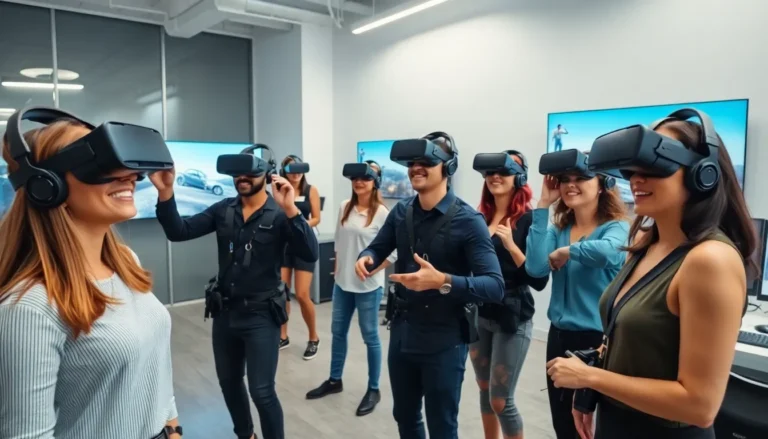
Imagine stepping into a virtual world where every motion, every gesture is tracked with precision, making you feel as if you truly belong there. Full body VR tracking isn’t just some sci-fi fantasy: it’s a rapidly advancing technology changing the way we interact with virtual environments. Whether you’re dodging virtual enemies or dancing like nobody’s watching, the integration of body tracking into VR creates an unparalleled immersive experience. Let’s jump into the intriguing realm of full body VR tracking and discover how it’s shaping our future.
Understanding Full Body VR Tracking
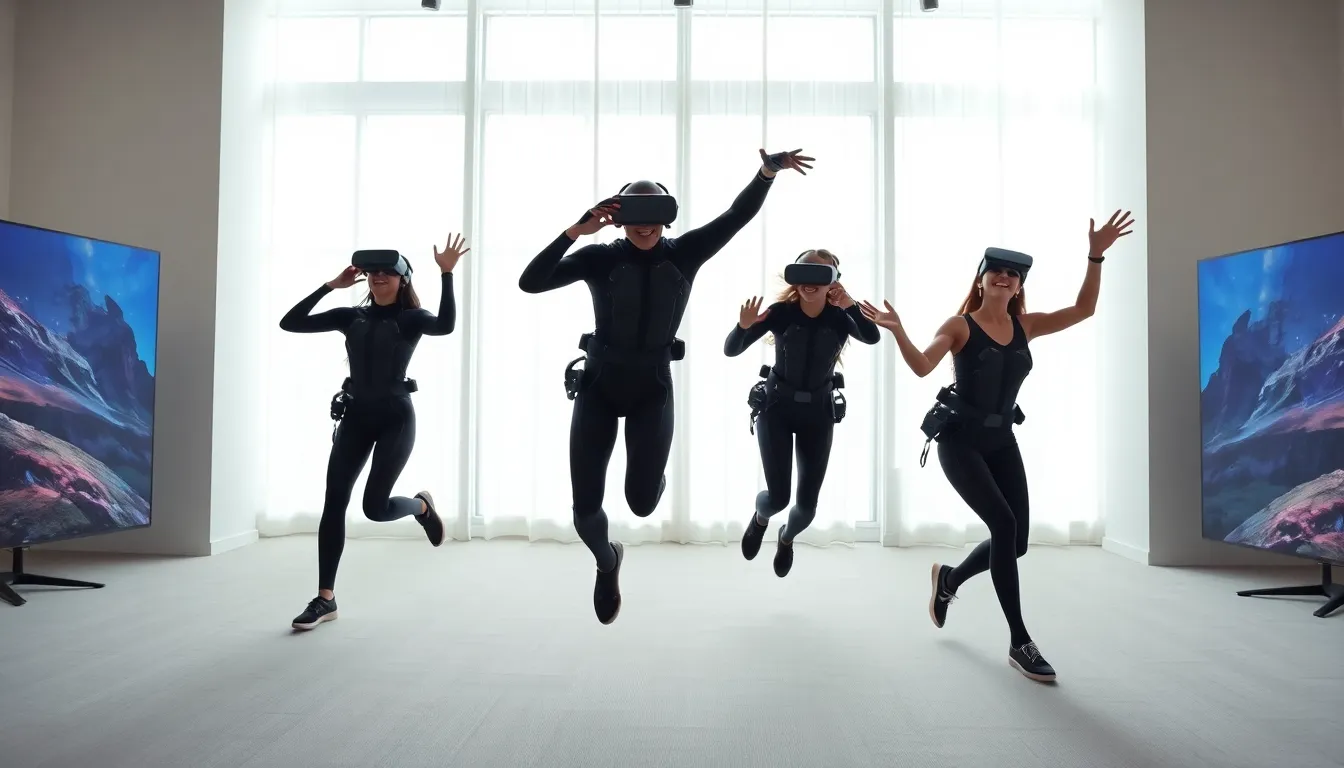
Full body VR tracking encompasses technology that captures the entire body’s movements in real time. Instead of just using handheld controllers to interact with virtual environments, full body tracking allows users to be fully immersed, translating their physical actions into the digital realm. This concept goes beyond merely watching: it creates a comprehensive experience that brings users into a vibrant, interactive space.
As VR enthusiasts know, traditional tracking methods often fall short, focusing only on hand movements. But, full body VR tracking changes the game, enabling users to walk, run, jump, and dance freely, mimicking actions just as they would in the real world. This level of interaction adds a layer of realism that makes gaming, training, and even social interaction in virtual platforms feel more authentic. By connecting the mind and body through technology, users can experience virtual reality in ways previously thought impossible.
How Full Body Tracking Works
The mechanics of full body tracking hinge on several technologies working in harmony. Many systems use a combination of inertial and optical sensors to capture movement. Inertial sensors, often found in IMUs (Inertial Measurement Units), track rotations and linear accelerations of different body parts. These sensors can detect movements in real-time, allowing for fluid motion capture.
Optical tracking, on the other hand, uses cameras placed in the environment to identify and follow a user’s body through visual recognition algorithms. By recognizing key points on the body, like joints and limbs, this method offers pinpoint accuracy and can even replicate complex movements.
Combining these two technologies creates unique full body tracking systems. For instance, some setups use a series of cameras placed around the user, while others incorporate wearable devices that sense movement without external monitoring. Both methods aim to deliver seamless integration of user movements into virtual experiences.
Technologies Behind Full Body VR Tracking
The landscape of full body VR tracking is rich with innovative technologies that enhance the immersive experience. Motion capture suits and wearable sensors are among the most popular solutions. Motion capture suits come equipped with numerous sensors that monitor the user’s movements and convert them into digital data. Companies like Xsens and Rokoko have pioneered this field, offering suits that allow for precise tracking without tethered connections.
Plus to motion capture suits, there are also finger tracking devices that allow users to manipulate objects with their hands. These devices, often equipped with sensors, ensure that every finger movement translates seamlessly into the virtual space. With companies like Manus VR leading the charge, users can enjoy hyper-realistic interactions in various applications, ranging from gaming to professional training modules.
Besides, advancements in machine learning and artificial intelligence are paving the way for even more intuitive tracking solutions, capable of adapting to a user’s unique movements and preferences.
Benefits of Full Body VR Tracking
The advantages of full body VR tracking are profound and far-reaching. Firstly, the enhancement of immersion allows for an unparalleled sense of presence. Engaging fully with a virtual world, feeling the weight of your movements, leads to an experience that feels genuine, almost as if one is truly there.
Also, full body tracking provides excellent benefits in various sectors beyond gaming. In rehabilitation therapy, for instance, therapists can monitor progress more effectively by capturing the patient’s movements in real time and providing tailored feedback. This can significantly improve recovery times and outcomes.
Employers also benefit in training environments, where employees can practice skills in safe, simulated situations without real-world consequences. Whether it’s aviation training or medical simulations, having the ability to replicate physical actions can enhance learning and retention dramatically.
Challenges and Limitations
Even though the remarkable advancements in full body VR tracking, challenges remain. Cost can be a significant barrier, as high-quality motion capture systems often come with a hefty price tag. Smaller developers and individual users may struggle to access such technologies, limiting widespread adoption.
Also, space constraints can pose issues. Full body tracking usually requires a certain room size to allow users to move freely without obstruction. In many homes or small offices, these requirements can be challenging to meet.
Tracking accuracy also varies depending on environmental factors such as lighting and obstructions. A well-lit, open space typically yields the best results, but everyday environments may not always meet these criteria. As technology improves, these limitations are likely to decrease, but they remain current hurdles.
Future of Full Body VR Tracking
The future of full body VR tracking looks bright, with continuous improvements on the horizon. As devices become more compact and affordable, wider adoption in consumer markets is likely. This trend may also pave the way for more innovative uses, from enhanced fitness programs to social VR platforms promoting real-world interactions through virtual means.
Also, as technology evolves, the integration of haptic feedback systems could add tactile sensations, enriching the immersive experience even further. Imagine feeling the texture of a virtual object or the impact of a virtual blow. Such advancements can change how individuals interact with virtual environments dramatically.
In education, training, and entertainment, the possibilities seem endless. Full body tracking could help a revolution in how people interact, learn, and engage with each other in digital spaces, completely reshaping our communication landscape.